

The Deceiving Heart
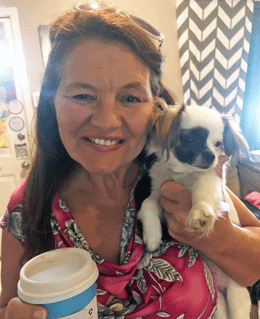
By Denise Seabourn
I am a nurse. My fiancé’s certified as an EMT. As a nurse, in a hospital setting, I’ve taken care of many cardiac arrest victims. I’ve been taught my whole career to recognize signs and symptoms of a heart attack and act quickly. I even taught CPR and Advanced Cardiac Life Support for many years.
Eleven years ago, my fiancé was acting as the contractor and doing most of the work building our new home. He was 40 years old and in fairly good physical shape. He exercised almost daily, with cardio 3-4 times a week for 1 to 1½ hours. He also tried to eat healthily, with salmon and vegetables for supper three to four times a week. He’s a big guy, 6 foot-1, with very broad shoulders and just a large build. This was probably one of the healthiest points in his life. He did have additional stress and tends to have a type A personality. He had no family history of heart disease that he knew about.
I lived in Washington state at the time, and he lived in Virginia. We would visit each other every couple of months. This occurred on one of my visits:
We had been shoveling dirt for our porch most of the day, hard physical labor. That evening, my fiancé started complaining of pain in his back between his shoulder blades. He attributed it to the shoveling. The pain continued for a couple of hours without relief from OTC pain relievers. It didn’t travel anywhere and he had no chest pain. After about two hours, he became increasingly sweaty and started having mild shortness of breath. He refused to go to the emergency room, thinking it was just a pulled muscle. It was summertime and hot in Virginia, so he assumed the sweating was from the heat.
I had a strong suspicion it was something more and had him take an aspirin. There was no way I could get him to call an ambulance, though. I finally convinced him to go to the emergency room to get pain relief if nothing else. I was a nervous wreck driving to the hospital, knowing this could be something very serious and an ambulance would’ve been the better option.
Twenty-four hours later, he had quadruple bypass surgery. The major takeaway from this experience is that signs and symptoms can differ for each individual. The pain being in the back and not the chest could fool someone. If you are experiencing pain, excessive sweating and/or shortness of breath, do not hesitate to get help. Call an ambulance; do not drive yourself! You could be the cause of more than one death if you pass out while driving.
This story has a happy ending, but the outcome could have been very different. And even with medical experience, it’s very different when it happens to you. You never believe you are the one having a heart attack, especially if you are young. Don’t ignore the signs, even if they are vague or unusual. It could save your life.
For more information on this health topic, visit heart.org.
Would you like help dealing with heart or stroke conditions -- either yours or someone else’s? Join us in the AHA’s Support Network! We are an online community of patients, survivors and caregivers where you can share your experience while getting encouragement, hope and informational resources from others who have been there. Membership is free and the benefits can be priceless. Register today.