

I survived and thrived after a yearlong bout with recurrent pericarditis
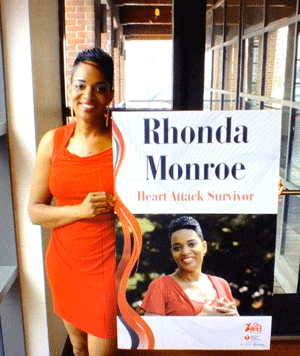
By Rhonda Monroe
I was a fit, active mother of three when I had a heart attack in 2004 at the age of 36 — less than a week after I gave birth to my daughter. It couldn’t have been scripted more perfectly if it were a scene in a Hollywood movie.
I broke out in a sweat and felt numbness and tingling in my left arm. The pain was intense, like there was an elephant sitting on my chest. I felt nauseous and I vomited. Despite having the classic symptoms — and an irregular EKG — it was a week before doctors took me seriously.
When they were unable to successfully repair my heart in the cath lab, I had an emergency quadruple bypass. Recovering was hard, both physically and emotionally. I couldn't nurse my newborn daughter or pick up my two boys (the oldest was eight, the other had just turned five).
A week later, I developed recurrent pericarditis, a painful inflammation of the sac that surrounds the heart. It felt like I had rugburn in my heart. (You could literally hear the friction in my chest). Lying down on my side would make me feel a little better, but I took so many anti-inflammatories that my stomach started bothering me.
After several repeat visits, doctors told me I was being paranoid and to go home and live my life. I was so frustrated that I wrote a poem from a hospital gurney. It starts like this:
Do you know what it's like to be in pain,
only to be turned away feeling ashamed
after you've been told your mind is to blame?
Well, I do. And not just me, but others too.
My story is unfortunate but true
And though it’s heartbreaking, the next victim could be you…
That wasn’t the only issue. In the year after my first open-heart surgery, my heart started to fail, and I developed a heart rhythm disorder called ventricular tachycardia, or v-tach. Less than a year after the first open-heart surgery, I had a second bypass. Later that week, I had a third surgery to relieve pressure that had built up around my heart. Those are just the highlights. It was a tough year.
I’m feeling much better now and have only had recurrent pericarditis a few times since then. The doctors doubted me when I told them I would recover, but I knew I could do it. The heart is a muscle, and you can build muscle.
To help other people in situations like mine, I became a health care advocate. I’ve done community education to raise awareness about heart disease and stroke, sat on boards and started my own non-profit organization to try to improve therapies and patient outcomes.
Living with recurrent pericarditis and other heart problems was not easy, but I'm proof that you can survive and even thrive.
The American Heart Association’s Addressing Recurrent Pericarditis patient education is nationally supported by Kiniksa Pharmaceuticals.
For more information on this health topic, visit heart.org.
Would you like help dealing with heart or stroke conditions -- either yours or someone else’s? Join us in the AHA’s Support Network! We are an online community of patients, survivors and caregivers where you can share your experience while getting encouragement, hope and informational resources from others who have been there. Membership is free and the benefits can be priceless. Register today.