
My story after a stroke and heart transplant
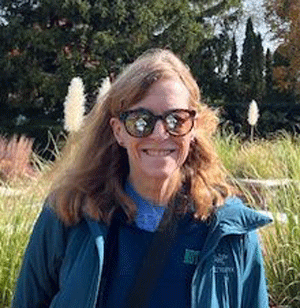
By Maureen Hennessy Pekosh
I was more worried about my daughter’s health as a Type 1 diabetic than my own. She had a history of seizures from low blood sugar. I awoke nightly to check on her and was often at school to assist when she was dangerously low. I was fairly active, though sleep-deprived. I ignored the warning signs when my activity level was impossible to maintain, assuming it was because I was hitting the big 5-0. I quit playing tennis and took frequent breaks when exercising. But when I couldn’t keep up on a walk with my kids, my family’s alarm got me to a doctor. Eventually, I was diagnosed with heart failure. I didn’t understand how I could be alive if my heart was failing.
My cardiologist assured me that with the right medicines, I could lead a fairly normal life. I shared that I was losing my peripheral vision, getting tingling in my fingers and toes, that I had an autoimmune blood-clotting disorder and used to take a baby aspirin daily. He said not to worry. My heart was just too weak to pump blood to my extremities. Days later, I felt faint in the shower and my left hand suddenly froze on the top of my head. Luckily, my daughter heard me fall and got help.
I woke up in the middle of the night staring at an unfamiliar ceiling with my hands tied to the bed and a tube down my throat. Confused, I tried to get anyone’s attention. Why all this for fainting in the shower? I was told I had a stroke. Another condition I didn’t understand because I never thought it would happen to me. I was told that since I had been successfully treated with tPA, I should again be able to lead a fairly normal life.
My life has been anything but normal. Five hundred ninety-seven after my stroke, I received a heart transplant. I was a rule follower who did her research and had a great group of family and friends to support me. My team believed I could pave the way for stroke survivors to receive transplants. Unbeknownst to me, I did.
About a month after my stroke, I began walking like Igor and couldn’t lift my left arm. After my transplant, I learned there were two areas of damage in my brain. I went to rehab but was told too much time had passed, and I would never walk unassisted. I enrolled in a local study, where I regained the ability to flex my ankle and bend my knee. After continued rehab, I walk independently, though not quickly, and am still balance-challenged. A year after transplant, I was told I have chronic rejection, a buildup of plaque in four of my arteries. The extra meds I take have caused kidney failure.
I appreciate things I used to take for granted. I don’t like being called a miracle. I am determined, inquisitive and stubborn. I want to define my future and then do everything in my power to make it happen. I help other women living with heart disease by running a local support group. I tell them no matter what you are facing, you are stronger than you know and capable of more than anyone else believes.
For more information on this topic, visit www.heart.org.
HEALTH CARE DISCLAIMER: This site and its services do not constitute the practice of medical advice, diagnosis or treatment. Always talk to your health care provider for diagnosis and treatment, including your specific medical needs. If you have or suspect that you have a medical problem or condition, please contact a qualified health care professional immediately. If you are in the United States and experiencing a medical emergency, call 911 or call for emergency medical help immediately.
Would you like help dealing with heart or stroke conditions — either yours or someone else’s? Join us in the AHA’s Support Network! We are an online community of patients, survivors and caregivers where you can share your experience while getting encouragement, hope and informational resources from others who have been there. Membership is free and the benefits can be priceless. Register today.