
My Aortic Stenosis Story- The Importance of Advocating for Myself
By James D. Darden
My story begins with having an unfamiliar lightheadedness and weakness after a quick and hard physical exertion while trimming overhead tree branches. The event caused me to have to take a seat, fearing I would pass out while standing. Although never losing consciousness (black-out), I did white-out: I had to close my eyes because I couldn't keep them open without becoming nauseous.
I chalked the experience up to trying to do too much too fast and didn't seek medical attention because everything returned to normal. Fast forward a few weeks, and I had another close-to-identical event after working on a network router over my head on a top closet shelf. Again, I had to take a seat and gather my senses to return to a normal breathing pattern and heart rate. Being the stubborn man I am, once again, I shrugged it off as a symptom of just getting old.
The turning point came after my last heart event when messing around with my boat and overexerting again brought about the same physical side effects as before, except this time, I was the only one able to captain the boat that my daughter and grandchildren were passengers on.
After an unremarkable visit with my PCP's PA, I self-advocated through emails and phone calls to rush an echocardiogram. I called the echo technician, who called a cardiologist, and I was told to go to the nearest heart specialty hospital and check in the ER with severe aortic valve stenosis with syncope.
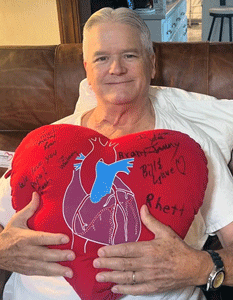
During a subsequent catheterization, I was found to also have three major blockages (90% in the main descending artery), which required open-heart surgery for three bypasses, along with the aortic valve replacement with a tissue-type valve. Since I was 72, the open-heart CABG procedure was recommended. That was because if follow-up surgeries were needed later in life (80s), the trans-catheter(less-intrusive) methods would be better tolerated. My advice to anyone experiencing unusual symptoms after physical exertion is to immediately seek a medical evaluation from a qualified medical professional.
For more information on this topic, visit www.heart.org.
HEALTH CARE DISCLAIMER: This site and its services do not constitute the practice of medical advice, diagnosis or treatment. Always talk to your health care provider for diagnosis and treatment, including your specific medical needs. If you have or suspect that you have a medical problem or condition, please contact a qualified health care professional immediately. If you are in the United States and experiencing a medical emergency, call 911 or call for emergency medical help immediately.
Would you like help dealing with heart or stroke conditions — either yours or someone else’s? Join us in the AHA’s Support Network! We are an online community of patients, survivors and caregivers where you can share your experience while getting encouragement, hope and informational resources from others who have been there. Membership is free and the benefits can be priceless. Register today.