
My Story — Year 1
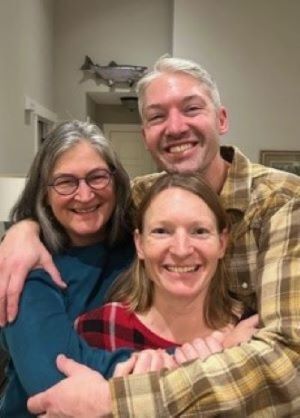
By Suzanne Grindle
Hi, friends. I want to introduce myself as a fellow open-heart surgery survivor. The “elevator introduction” is short and sounds simple: One year ago today, they stopped my heart and repaired it. It was a miracle I didn't know I needed. I think we all know that’s never the whole story. I’d like to share mine with you all. I want to tell you about those first few days of a diagnosis that shocks you. I’ll talk about the depths of disbelief, anger, frustration, sadness and, finally, acceptance. I want to lean into those huge moments when I realized that the best is yet to come. I feel brave now, and I hope that in sharing our truths, we can hold each other up — or at least lean on each other to stay upright.
The basics: I was diagnosed in January 2025 with a bicuspid aortic valve and severe stenosis in need of an immediate aortic valve replacement. I had surgery in February 2025. Today, I am writing this after rowing, lifting, riding two horses (jumping them for fun), and running with the dogs and the kids. By all medical measurements, my story is one of success. On this one-year anniversary, I am reliving the days before my surgery. There were so many times this year when I wondered why I even bothered with the ordeal. None of us knows what the path forward will be, and questions to caregivers are often met with “everyone is different.” I don’t know about you, but that frustration weighed on me. I wanted real answers. What happens first? What are the complication rates? Why don’t my bras fit (what a weird problem to manage)? Why am I so puffy? What are the actual chances that I will die from this insult to my body and mind? Will I ever get my life back?
DIAGNOSIS:
I was dealing with exhaustion, but I had a terrible hip problem; my husband had recently died of sudden cardiac arrest; and I had plenty of reasons to be tired. Because of my family history, my dearest friends strongly encouraged a cardiac consultation. I expected an angiogram and a lecture about cholesterol. Instead, I was referred to the valve team. I had ZERO idea I was seeing a surgeon until they called to confirm the "surgical consult." That tidbit sent me into a full panic. I was floored when the surgeon told me I needed immediate replacement. The pressure in my heart was critical. They told me, “We don’t see people walking around with these pressures; we see them in the ER with failing hearts.” I collapsed. I even tried to leave — thankfully, my brother literally held the door shut. I was hysterical. I was positive I would die on the table or be incapacitated. I was already in pain from my hip, alone, afraid and wondering what the rest of my life would bring.
SURGERY:
I had a few choices to make, but only a few. Waiting was not an option, and I had to consult with cardiology and surgeons to choose a valve. As an outdoor person who crashes on rocks, trips over dogs and gets thrown from horses, blood thinners felt like too much risk. I believe in the science; there will be a better way by the time this valve needs replacing. Not having real choices meant that I had lists of questions about recovery and limitations. I do not believe in letting doctors decide what’s best for me without my input. After being told "not to Google" by a nurse (infuriating), I found people on the team who would actually explain the why. My surgeon was a huge advocate; she called me a week prior and spent an hour answering every concern, including my fears about previous nerve damage. She promised the surgical suite was her purview and she would keep me safe. True to her word, I had no neurological complications. The weeks of waiting were brutal. I needed anti-anxiety medication to sleep. I put my life in order and prepped my house to live on the main level. No one wants to talk about the goodbyes, but I made sure to see everyone I loved. I don’t know how I made it to the hospital. Without friends and family managing me, I wouldn't have gone. The surgical prep was overwhelming — signing consent forms while getting IVs felt surreal. I remember sitting alone, waiting. I was not my "best, most positive self." I vividly remember trying to escape after they wheeled me into the OR. Every part of me panicked. I wasn't resigned or confident. I share this because I can’t be the only one who struggled. Also, a crazy woman trying to escape the surgical suite must have been darkly funny.
RECOVERY
I’ve often wondered how many people remember those days in the ICU. It was a nightmare for me, and I remember so many details, even if time was garbled. The one "note" I have for caregivers, patients and staff: Please keep telling us how well we are doing. I had so many complications at first. I may go into detail about my experiences soon but writing about that time is hard. It was lonely and frightening, and my body was being run by machines. I kept asking what was happening, I felt like I couldn’t breathe and they kept telling me I was okay. Those reassurances were the only things that kept me from screaming in frustration or just giving up. Every single thing that happens to your body in there feels so wrong. The real helpers were the nurse who sat and talked to me about her dogs when she wasn’t busy; the chaplain who had lost his wife, had his own open-heart surgery, and was now remarried with a big, beautiful life; and the girl who did one of my 97 EKGs — she sat and laughed with me while I was dealing with yet another insult to my body. People who did not help: the nurse who came in and told me that crying "never helped anyone," or the psychiatrist who told me I needed Prozac because I "shouldn’t be so upset,” or the random doctor who barreled in without an introduction, looked at me, said “wrong room” and ran out.
LESSONS FOR SURVIVAL
I found that honest validation and information were the most helpful tools. I needed to know what they were doing, who they were and what was truly normal. I must have asked twenty times, "Am I going to die?"
We all have different needs. I wanted to know everything. I needed the complication rates. I wanted to know the why behind every test. I wanted the results immediately, and an explanation to go along with it so I could understand what was happening to my body. Some people are content to "let the doctor do what’s best," but just hearing that makes me want to scream. I know what I want. I know how I want to live my life. I get to decide what a good life looks like. We are not just a checklist of recovery milestones. She can talk. She can poop. She can walk or get in and out of bed. Success! No. We want to talk to our caregivers about milestones that actually matter to us — the markers of achievement that give us our real lives. Personally, seeing people in the hospital who had been through this and survived to run, hunt and ride again? That is what actually got me home.
For more information on this topic, visit www.heart.org.
HEALTH CARE DISCLAIMER: This site and its services do not constitute the practice of medical advice, diagnosis or treatment. Always talk to your health care provider for diagnosis and treatment, including your specific medical needs. If you have or suspect that you have a medical problem or condition, please contact a qualified health care professional immediately. If you are in the United States and experiencing a medical emergency, call 911 or call for emergency medical help immediately.
Would you like help dealing with heart or stroke conditions — either yours or someone else’s? Join us in the AHA’s Support Network! We are an online community of patients, survivors and caregivers where you can share your experience while getting encouragement, hope and informational resources from others who have been there. Membership is free and the benefits can be priceless. Register today.