
Helping the Organizations That Helped Me
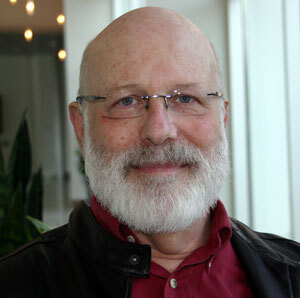
By Gordon Fox
The first time I passed out, I was a 21-year-old university student standing in my bathroom. Every few years after this, I'd have another episode. Each time I mentioned it to a doctor, they'd tell me they didn't hear anything wrong in my heart and shrug their shoulders. Finally, when I was a 47-year-old university professor, my internist heard a murmur and sent me to a cardiologist. He told me I had hypertrophic cardiomyopathy (HCM), a disease I'd never heard of, but an echocardiogram showed my heart wasn't very badly obstructed, so I'd probably do fine with a beta blocker.
Over the next few years, I had more episodes. There was the one while I was driving in Hawaii. The ER docs didn't see any problem with my ECG, so they just told me to be careful. Another episode at home led to more tests, which didn't turn anything up. Finally, when I was 54, I passed out four times one night while we were traveling in Argentina. The cardiologist who treated me found that the obstruction in my heart had become quite severe and urged me to go home (Tampa, FL, at the time) to get surgery.
At home, my cardiologist repeated the tests they'd done in Buenos Aires and got the same result. After he and I both did some research, we agreed I should go to one of the surgeons at a recognized Center of Excellence for HCM, because they have extensive experience with myectomy. The Hypertrophic Cardiomyopathy Association (HCMA) gave me the name and number of a specialist. When I started describing my problem to the secretary, she said, "Let me see if I can get the doctor on the phone; he'll want to talk with you right away." I was astonished! He and I talked, and he wanted to see me as soon as possible. Some two weeks later, I had my myectomy.
I won't lie: My myectomy wasn't a piece of cake. I had plenty of surgical complications, and the next six or eight weeks were pretty hard for me. And then I started to feel really well.
That was more than 15 years ago. The myectomy changed my life. I continued my career as a researcher and teacher. I hike, bike and swim. I travel without worrying much about my HCM. In those years I've some rhythm issues -- atrial flutter and Afib and, just a few months ago, ventricular tachycardia -- but my doctors have treated them (catheter ablations for the atrial problems and an ICD for the ventricular tachycardia), and those issues don't dominate my life at all.
When I recovered from surgery, I decided I wanted to give something back to the community that had helped me so much. I thought my training as a biologist might help me explain things to others coping with my disease, especially genetics and physiology, and I became a discussion moderator for the HCMA. Fifteen years later, I'm still doing that, and I'm now helping the HCMA by being chair of its patient education committee and a member of the board of directors. I'm delighted to start helping the AHA network as a volunteer moderator!
For more information on this health topic, visit heart.org.
Would you like help dealing with heart or stroke conditions -- either yours or someone else’s? Join us in the AHA’s Support Network! We are an online community of patients, survivors and caregivers where you can share your experience while getting encouragement, hope and informational resources from others who have been there. Membership is free and the benefits can be priceless. Register today.