
A Ticking Time Bomb?
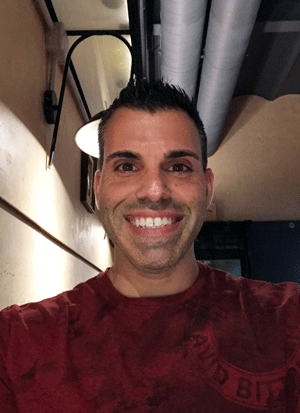
By Scott Rushton
While a freshman in college, I discovered I had a heart murmur. The doctor said it was an extra beat in my heart, calling it “functional” and not a big deal.
But when my dad passed away from a massive heart attack in 2013, I decided it may be a good idea to go to the cardiologist. I was 35 years old at the time.
After performing an EKG and ultrasound, the doctor discovered I had a bicuspid aortic valve. Only 2% to 3% of people in the U.S. are born with this condition.
If you think of the valve like a Mercedes Benz symbol, it has three leaflets. Two of mine were stuck together, causing it to work harder, calcifying over time and closing the opening that lets blood in and out (aortic valve stenosis).
When I first started watching it, the opening was at 1.3cm; normal is 2.4cm. In 2022, it reached .85cm, which is borderline critical (.7cm). So surgery was just the right thing to do at the right time. I didn’t really have any symptoms and lived a pretty normal life. But if I waited any longer, it was a roll of the dice that may not have ended well.
The hardest part of my journey was making the decision to have the surgery while not feeling any symptoms. Imagine living to the fullest and not thinking or feeling anything is wrong, while your doctor keeps telling you that you are a ticking time bomb!
Although I felt fine, I knew that I had to have this procedure for myself, my family and friends.
After the surgery, my doctors tell me my heart is great, my arteries are clear and now I have the new valve. If I maintain a healthy lifestyle, it may last 8-15 years, maybe 20 in the best-case scenario.
Eventually, I will need another procedure — which I am not looking forward to — but I am hopeful that continuing to live healthy will make that scenario a long way off!
For more information on this health topic, visit heart.org.
Would you like help dealing with heart or stroke conditions -- either yours or someone else’s? Join us in the AHA’s Support Network! We are an online community of patients, survivors and caregivers where you can share your experience while getting encouragement, hope and informational resources from others who have been there. Membership is free and the benefits can be priceless. Register today.