A FaceTime Call with My Niece Saved My Life
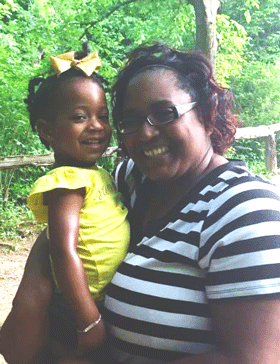
By Dawn Turnage
I had been experiencing fatigue and migraine headaches for a few days, but I was committed to a workout challenge I was doing with my coworkers, so I pushed through. I soon started developing some odd symptoms, but nothing that made me sound the alarm. My vision was blurry, but I thought maybe I just needed to get my eyes checked. I kept dropping things, but I thought perhaps I was just having a “clumsy” day!
While I was driving home, I lost time at a traffic stop and came to when I heard horns honking. I had blacked out for a moment. I was working two jobs at the time, so I thought I just needed to go home and rest. I had health insurance, but I was reluctant to call my doctor because I truly believed I could just shake it off.
At home, I started to see stars and felt a tingling numbness in my hands and arms. My sister called me on video and my niece, Naomi, who was 4 at the time, wanted to chat.
Naomi started asking me why I was making funny faces, and my sister, a Certified Physician Assistant, went through the F.A.S.T. checklist. She asked me if I was experiencing facial drooping, arm numbness, or slurred speech. Knowing that the “T” in F.A.S.T. (time!) is critical to prevent brain damage, she had my other sister, who lived nearby, come over to check on me.
But I was still downplaying my symptoms. I didn’t want to go to a hospital but agreed to go to an urgent care. Little did I know that my PA sister had alerted the center, sharing that she does not believe my diagnosis as being Bell’s palsy based on what she observed during our FaceTime call; the center had an ambulance to take me the hospital.
At the hospital, the doctors told me I had suffered a transient ischemic attack (TIA), or mini-stroke. A TIA is typically called “warning stroke” because it’s often a warning of a major one. Although I knew I had high blood pressure and probably could be taking better care of myself, I thought for certain that I was too young to have a stroke!
I thought of my grandmother, who died of a massive stroke at 63. Other than that, I don’t know much about my family history. It’s just something we never spoke about when I was growing up.
From that moment, I knew I wanted to change my life. I started exercising more, monitoring my calorie intake, avoiding red meat, and watching my salt consumption. I am proud to say I lost 60 pounds!
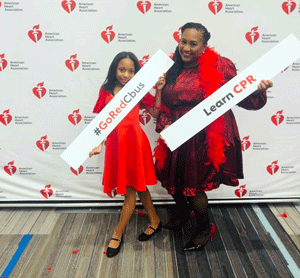
I was introduced to the American Heart Association while I was in the hospital. I participated in the Woman of Impact campaign in 2022 and am proud to be a member of Real Women Class of Survivors for 2023. I feel like now is my chance to make a difference, especially within the Black community. I want to inspire other women to know their numbers, seek medical care, find ways to manage their stress, and put themselves first.
I feel stronger than I was before my stroke. I’m making me a priority, and it’s made all the difference.
HEALTH CARE DISCLAIMER: This site and its services do not constitute the practice of medical advice, diagnosis or treatment. Always talk to your health care provider for diagnosis and treatment, including your specific medical needs. If you have or suspect that you have a medical problem or condition, please contact a qualified health care professional immediately. If you are in the United States and experiencing a medical emergency, call 911 or call for emergency medical help immediately.
For more information on this health topic, visit stroke.org.
Would you like help dealing with heart or stroke conditions -- either yours or someone else’s? Join us in the AHA’s Support Network! We are an online community of patients, survivors and caregivers where you can share your experience while getting encouragement, hope and informational resources from others who have been there. Membership is free and the benefits can be priceless. Register today.