
Turning Pain Into Purpose
By Hannah Keime
I was diagnosed my first month of high school. Before that, I would have been considered a very active, relatively normal youth; I danced and played sports in and out of school. I had a few fainting incidents and palpitations that I reported to my pediatrician, but he assured me there was nothing to worry about. Then my aunt was diagnosed with hypertrophic cardiomyopathy (HCM), which can often be genetic, so she told my mom to get me and my eight siblings checked by a cardiologist.
At my appointment, that cardiologist said, “I don’t know how you haven’t dropped dead yet.”
My life didn’t end with my HCM diagnosis, just life as I knew it. I was told no more dance or sports or strenuous activities. I was started on medications and monitored. My condition progressed so that I qualified for an implanted defibrillator at age 16 and became what we endearingly call a bionic babe.
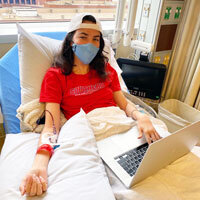
That defibrillator saved my life when I went into sudden cardiac arrest in my sleep just months later.
It shocked me again when my heart rate skyrocketed to the device threshold during a school lip-sync contest a couple years after that. That time I was conscious and, because it was in a show, the event was caught on video, thus bringing the grand total of videos I know of showing someone getting shocked like that to one.
Those shocks sent me reeling but I put up the reel so people would know what life with hypertrophic cardiomyopathy, and its treatments, looks like in real life. I hope it won't be such a shock if it happens to them. You see, when I was first diagnosed and no longer had physical activities to fill my afternoons, I started spending my time with TV and films. As I used them for therapy and solace for my condition, I realized I never saw my condition on them. Where were the people like me? Where were young heart patients depicted? There’s so many of us out here yet almost none on TV.
Over the years, my passion for filmmaking, my gratitude for survival, and my understanding of HCM grew. I realized I could be the person who brought representation to my people. I earned my degree in film. I co-founded the organization HeartCharged with my sister, also a HCM patient and bionic babe.
With HeartCharged, we have created a patient-to-patient support network; my content has educated, entertained, and informed millions; legislation has been enacted and a heart screening initiative begun; people have been warned and trained; and we have saved lives.
I am still at my core a cardiomyopathy patient; I suffer from fatigue and randomly faint, and my heart beats are often irregular. It defines me daily in how I live and what I determine to do. And I am determined to do much more because it needs to be done.
I am particularly passionate about things from my own cardiomyopathy journey. That’s why I often share the warning signs of a cardiomyopathy that my family and even my doctor didn’t recognize. I want people to start to Think Cardiomyopathy.
As a sudden cardiac arrest survivor myself, I work to see the survival rates at 75% or better where they belong, and to encourage society to no longer tolerate the out-of-hospital survival rate of 10%.
As a woman, I want people to realize the beauty of resuscitating a woman and the need to bare her chest to do so.
And as a filmmaker on a cardiomyopathy journey, my goal is what I longed for when my journey began: true representation in TV and film.
I understand getting hit with jolts in life, from the physical jolts that brought me back from death to the emotional jolts that brought me to my knees in prayer. I understand the need to be understood and the compassion that can only be found in community.
If you’ve been jolted in some way, I want you to know I understand, in some way.
I share my story often and freely because when I looked up my heart condition online after being diagnosed as a teenager, all I found were headlines with dead kids. Ten years later, I can say that you can look up my condition and find a community of those alive and those honoring the legacy of those who passed, and you can find all that on my Instagram account @heartcharged.
There is also progress in the realm of recognizing, diagnosing, and treating HCM, though not nearly enough research considering how many are affected by cardiomyopathies. I work to change that as well through HeartCharged. It is the hope and community I wished to see when I got diagnosed.
To learn more about hypertrophic cardiomyopathy, visit www.heart.org/hcm.
HEALTH CARE DISCLAIMER: This site and its services do not constitute the practice of medical advice, diagnosis or treatment. Always talk to your health care provider for diagnosis and treatment, including your specific medical needs. If you have or suspect that you have a medical problem or condition, please contact a qualified health care professional immediately. If you are in the United States and experiencing a medical emergency, call 911 or call for emergency medical help immediately.
Would you like help dealing with heart or stroke conditions -- either yours or someone else’s? Join us in the AHA’s Support Network! We are an online community of patients, survivors and caregivers where you can share your experience while getting encouragement, hope and informational resources from others who have been there. Membership is free and the benefits can be priceless. Register today.