
Tom B: Stroke and Aphasia – Ten Years to the Day!
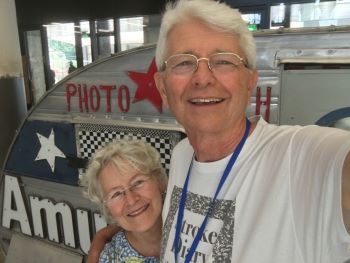
Tom in 2021, ten years after stroke and aphasia (Photo courtesy of Tom Broussard)
Learn from Tom, a community member and volunteer moderator with the American Heart Association’s Support Network, through his description of his own experience and understanding of stroke-related aphasia and recovery over the last ten years – to the day! Read Tom’s article, Neuroplasticity: The Daily Alchemy of Turning Thought into Thoughtful Expressions by Tom Broussard, Ph.D (26 Sept 2021, Vol 3. Issue 13, Aphasia Insights)
I had a stroke and aphasia on September 26, 2011, ten years to the day. I was an associate dean at The Heller School at Brandeis University when I fell down on Main Street, Waltham, MA. I lost my language and could not read, write or speak well.
I got better over the years but it is almost impossible to explain the day-to-day (never mind the hour-to-hour or minute-to-minute) healing trajectory that my brain was traveling, “fixing” itself every day while I was still unaware of what was being fixed every day.
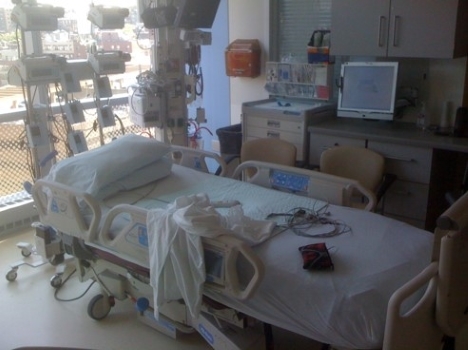
Tom's hospital room and bed on Sept. 26th, 2011 (Photo courtesy of Tom Broussard)
Clocks are designed to tell time and are “geared down” (physically linked) to the second, minute, and hour hands moving at different increments of time. People can’t see the movement of the minute or hour hand of a clock. It is below the level of visual perception. The radial velocity of the minute hand is 60 times less than the second hand. The hour hand moves 12 times slower than the minute hand. Hence, only the passage of time allows one to see the minute or hour hand advance.
A similar sensation occurs as brain and language injuries recover; much of it taking place below the surface of conscious awareness and perception. The brain possesses a clockwork-like machinery that runs millions of operations per second at the molecular level and “sum up” the intervening work packages of (within, between, and through cells), eventually becoming an item, an idea, or an epiphany that can be expressed.
But it takes a long time to “see “ recovery until after the changes become noticeable and visible. Most people with aphasia (PWA) come to understand that their activities are therapeutic, but there aren’t any silver bullets. There is no cause with an immediate effect as a result of an hour of speech therapy.
It takes time, repetition, and persistent effort to induce long-term, habitual experience-dependent neuroplasticity and the resultant learning. Sadly, much of the effort can still give the appearance of being for naught without understanding the underlying cogs and wheels that makes the neural clock work.
The effortful act of groping, grabbing, grasping, and searching for words that can’t be found provide the active ingredients that induce plasticity. The remaining cells are the fertile soil that absorb the day-to-day energy of the experience-dependent activities that prepare the ground for the word-finding seeds to germinate. These root-like tendrils thrive in the cognitive compost cooking beneath the surface of perceptibility pushing the sprouts skyward until the words bloom again.
The process of regaining one’s language can still appear somewhat magical. It occurs in the most basic of ways without knowing that the activities themselves weave the spell. Plasticity converts thoughts and cognitive activities into brain matter.
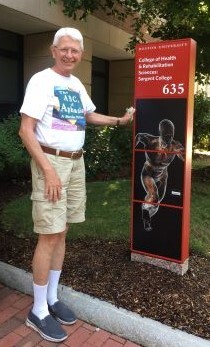
Tom in 2021, ten years after stroke and aphasia (Photo courtesy of Tom Broussard)
How does that happen if it isn’t magical in some way? Although speech therapists and people with aphasia aren’t sorcerers, wizards, or witches, they still sing the magical chant of the not-so-magical daily alchemy of turning thought into thoughtful expressions.