
Thriving On the Little Things
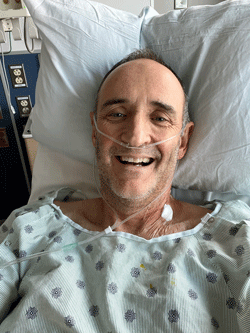
By Greg Clemons
On September 18, 2022, I woke up around 2:30 a.m. with sharp chest pains. My husband drove me to the emergency room at 3 a.m., where I collapsed just as we arrived. I was conscious until I got into an ER bay, and then I passed out. I had had cardiac arrest: My heart had stopped. The cardiac team performed one round of manual CPR, then they used the defibrillator. It saved my life. I have no recollection but, unfortunately, my husband witnessed the whole thing, and since then he has been struggling.
I was rushed to the catheterization lab. There they inserted two stents: I had 99% blockage in my left anterior descending artery and 70-80% in the other major heart artery. I was on life support for a day and a half. I was then in the cardiac intensive care unit for three days when they inserted a defibrillator. I had severe sternal pain for weeks after my CPR. It was hard to inhale and exhale, and I had to take ibuprofen to help the pain. Luckily, the manual CPR did not break any of my ribs! It was only a week or so later when I looked in the mirror and saw the bruising left by the paddles of the defibrillator. It was a scary reminder of what I had been through.
It also reminded me of a personal connection with CPR. When I was high school, I was a lifeguard and received regular CPR trainings. One night I was doing my regular walks around the pool when I noticed a young boy floating face down in the deep end. I jumped in, pulled him to the side, and performed CPR on him: chest compressions and mouth-to-mouth. Soon he was spitting out water. The EMTs took him to the hospital, and he survived. I remember that after that event I was unable to sleep for several days, but I did save someone’s life.
Now, as Greg 2.0, I wonder: How could this happen to me? I’m 59, I’ve run 30 miles a week for more than 30 years, I eat a vegan diet and do not smoke or drink. However, I learned that on my father’s side of the family, heart disease is prevalent. Each of his seven siblings had some form of heart disease, and so mine is likely genetic. Heart disease does not discriminate.
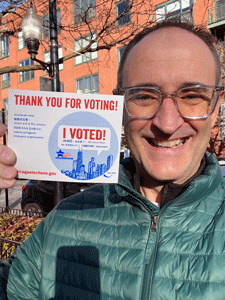
Today, surviving and thriving requires focus. I go to cardiac rehab three times a week, my employer is allowing me to come in just three days a week, and my family and friends surround me with their love. I am grateful for my cardiac team. But I still wake up in the middle of the night thinking I will have another heart attack. After I do my breathing exercises, I can get back to sleep.
At this point in my life, it’s less about drastic changes and more about awareness of the small things that are so important. I focus more on living in the moment, breathing exercises, prayer and learning to say no. I want to run again, and someday I will.
For more information on this health topic, visit heart.org.
Would you like help dealing with heart or stroke conditions -- either yours or someone else’s? Join us in the AHA’s Support Network! We are an online community of patients, survivors and caregivers where you can share your experience while getting encouragement, hope and informational resources from others who have been there. Membership is free and the benefits can be priceless. Register today.