
Surviving an Unexpected Aneurysm
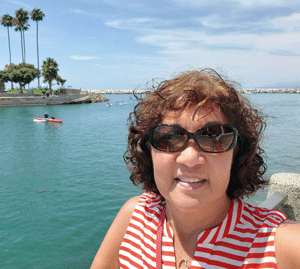
My name is Diumping Whitman, and I’m 64 years old.
On Feb. 21, 2021, I was healthy, physically active, enjoying a normal working life — until I had an unexpected descending aorta aneurysm and passed out in the kitchen during dinner.
Luckily, my husband and son were home. My husband, who thought I was having a heart attack, immediately called 911. Around noon that day, I had felt my jaw crack and l couldn’t read the words on the TV for a while. But I wear glasses, so I didn’t assume anything out of the ordinary.
Once the paramedics arrived, they checked on me and took me to the hospital for further tests. The hospital took a few hours to ultimately discover what was going on. I was unconscious and rushed into the ER within a few hours to undergo surgery for nine hours with a low chance of survival.
Meanwhile, my husband and son waited with little knowledge of my condition. Because of COVID-19, they were only allowed to see me for a few minutes before the surgery. And even after the surgery, they were not allowed to visit me in the hospital.
Because my family wasn’t allowed to visit me, I felt alone. But I called them as much as I could. I also could not go to cardiovascular rehabilitation due to the ongoing pandemic, which hindered my recovery. I am grateful for the staff who helped me and the family who supported me throughout the tumultuous time.
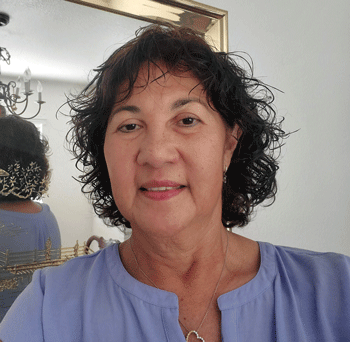
Over a year later, my life has changed forever. My physical abilities and capacities have been reduced, which is frustrating at times. Due to my limitations and frustrations, I sometimes struggle with my emotions and my need to rely on others.
Because this traumatic event has forever changed my life, it’s necessary to have a support network to aid in the recovery process. My family and friends continue to support me physically and emotionally — making lasting impacts on me for the rest of my life.
I suggest anyone going through something similar to reach out to your loved ones or similar support groups. It may be frustrating and emotional, but we can persevere. The road has been tough, but I am glad I am still here.
This is my story and thank you for reading.
For more information on this health topic, visit heart.org.
Would you like help dealing with heart or stroke conditions -- either yours or someone else’s? Join us in the AHA’s Support Network! We are an online community of patients, survivors and caregivers where you can share your experience while getting encouragement, hope and informational resources from others who have been there. Membership is free and the benefits can be priceless. Register today.