

Shortness of breath led to a surprising diagnosis for Dempsey Worner
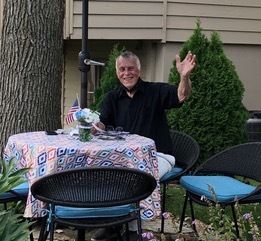
While I’m nicknamed for the champion boxer, Jack Dempsey, and played football in high school, I’ve always preferred to use my head rather than my fists, teaching first in the public schools and later, at Virginia Tech in Blacksburg, a beautiful town in the Blue Ridge Mountains.
Now 83 and retired, I stay active by promoting educational standards, writing, and distributing short profiles about my former classmates and spreading the word about transthyretin amyloid cardiomyopathy (ATTR-CM), a rare heart condition I was diagnosed with nearly six years ago.
My symptoms took me by surprise. I’ve always been a strong swimmer, but in the summer of 2015, I had trouble staying underwater for more than a few strokes. Even a short stroll made me lose my breath.
At my next wellness exam, I mentioned my symptoms to the nurse practitioner and before you know it, I was on a treadmill — one of several tests that showed I had atrial fibrillation (AFib), an irregular heart rhythm that can lead to stroke when left untreated.
The doctors tried to fix it by shocking my heart — a procedure called a cardioversion — but a few days later, the irregular heartbeat returned.
My doctor recommended an ablation, which would have essentially destroyed the part of my heart that was causing the problem. Instead, I decided to get a second opinion at a top medical institution.
After running more tests, the cardiologist told me I had a condition called transthyretin amyloid cardiomyopathy (ATTR-CM).
Even more shocking, he said there was no pharmacological treatment for the disease at the time of my diagnosis in 2016. What do you mean, treatment isn’t available? Am I going to die? My head was spinning.
Later, genetic testing revealed I had the wild type of ATTR-CM, which is attributed to aging and seems to affect mostly older people.
Some people with wild-type ATTR-CM have limited symptoms while others develop end-stage heart failure, as well as carpal tunnel syndrome, lumbar spinal stenosis and tingling and numbness in the extremities.
Indeed, in addition to shortness of breath, I experience occasional tingling and loss of feeling in my arms and hands. Fortunately for me, moving my arms and massaging my ulnar nerve (also known as the crazy bone) alleviates the sensation.
But I don’t let my symptoms get me down. In fact, in many ways, I feel better now than I did when I was diagnosed, working out regularly, walking on the treadmill and swimming as much as I can.
I hope sharing my story will give other people with ATTR-CM hope and encourage them to seek help. After all, I’m living proof that early diagnosis and proper treatment makes all the difference.