
My Caregiver Journey
By George Cecere
Being a caregiver is both rewarding and challenging. When I have assumed that role, I can honestly say that I would do it all over again with no hesitation. Still, it is fraught with questions, new emotions and self-doubt. Am I doing all I can? Am I doing too much? Am I doing it correctly? There is no handbook and, much like the journey of the loved ones for whom we give care, each journey is unique. It is filled with various obstacles, one-of-a-kind dynamics and constant change. You have to be nimble, resilient and patient. However, even if you are al those things, it is still filled with frustration, stress, and doubt.
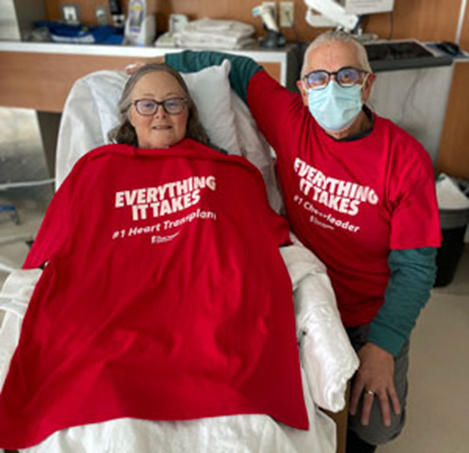
My caregiving journey began some 47 years ago when as a 16-year-old teenager, my then-girlfriend and now-wife of 46 years, Terri, was diagnosed and treated for non-Hodgkin’s lymphoma. The lifesaving treatment back then led to a diagnosis of cardiomyopathy at age 43 and ultimately led to a heart transplant at age 62. In fact, on Nov. 6, 2022, she became the first heart transplant recipient at a newly approved transplant center in Ohio.
Late summer 2022, test results and other factors made it evident that her condition was worsening, and her heart failure cardiologist made the call to refer her to the Advanced Heart Failure Team. The fall of 2022 found us consulting with this team and on Oct. 24, we met with the transplant surgeon who confirmed that her condition had deteriorated and that she was in end-stage heart failure. He described it as similar to falling off the Empire State Building …as she fell, she was doing OK on the way down … but it was evident that she would eventually hit the ground, and he felt that would happen sooner rather than later!
On Oct. 26, Terri was admitted to the hospital after a right heart catheterization (cath) indicated issues with pulmonary pressure and on Oct. 28, she had a second right heart cath to confirm that this potential block to transplant could be successfully addressed. After confirmation that the pulmonary pressure would not impede the transplant, an Impella heart pump was implanted. At that point, she was admitted to CVICU to begin the wait for a new heart.
On Nov. 1, 2022, the transplant team listed Terri with United Network for Organ Sharing (UNOS) and on Nov. 4, a match was found. At 7 p.m. on Nov. 5, she was rolled into the operating room and by dawn the next morning her transplant was complete, and she was returned to CVICU to begin recovery.
Now 15 months post-transplant and after a few speed bumps along the path, Terri’s recovery is well underway and progressing steadily. I have to constantly tell myself that she is doing well, that we are doing everything we can to be safe and careful. It’s important to remember that a primary reason we have traveled this road is to live that new normal. Our team reminds us of that every time we visit. Stay vigilant and report everything honestly to your team — they want to do what’s right and the sooner they are aware the sooner, they can take action. I find it comforting to remind myself every time I am hovering too intensely. Look at it as yet another skill in the caregiver toolbox: the ability to trust in your partner and yourself that you are doing everything it takes!
Whether your caregiver journey is just beginning, or you have been at it for a long time, remember that you have to take care of yourself first so you can be there for them. Look for the positives wherever possible, relish in the small victories, and try not to get too discouraged by the speed bumps that you will inevitably encounter.
For more information on this topic, visit www.heart.org.
HEALTH CARE DISCLAIMER: This site and its services do not constitute the practice of medical advice, diagnosis or treatment. Always talk to your health care provider for diagnosis and treatment, including your specific medical needs. If you have or suspect that you have a medical problem or condition, please contact a qualified health care professional immediately. If you are in the United States and experiencing a medical emergency, call 911 or call for emergency medical help immediately.
Would you like help dealing with heart or stroke conditions — either yours or someone else’s? Join us in the AHA’s Support Network! We are an online community of patients, survivors and caregivers where you can share your experience while getting encouragement, hope and informational resources from others who have been there. Membership is free and the benefits can be priceless. Register today.