
Don't take your heart for granted
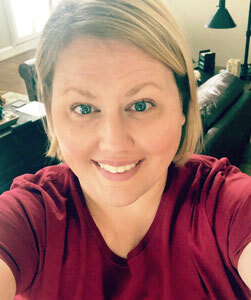
By Kim Quilty
Before 2018 I took my heart beating for granted. I thought my involuntary nervous system and I had an unspoken deal: You do your job, and I'll do mine.
I had a lot of stuff to take care of every day to keep my circus running — entertaining little people; making breakfast, lunch, dinner; planning PTA events; trying to work part-time; volunteering; being a not-for-profit Uber driver/babysitter for my children and their friends who were involved in every activity under the sun; doing all the laundry and the shopping; and on and on. I was tired, but I loved pretty much every stinking minute of it.
That was until my involuntary nervous system led by my cardiac muscle missed the memo on our unspoken deal and staged a "coup."
I'm going to be honest again: I was annoyed. I had "stuff" to do. I was about to take my daughter and her bestie out for brunch when I started to feel nauseous, clammy (I had never felt clammy before and it was a gross feeling), short of breath, super-tired (a tired I had never felt before) and had weird sensations going down both of my arms. My first thought was to shake it off and pull myself together. I chalked it up to not getting enough sleep the night before (although I never got enough sleep) or not drinking anything but coffee that morning. Never once did I think about my heart.
The feeling didn't pass and, luckily, I was smart enough to call my friend (my daughter’s bestie's mom who just happens to be a nurse) and tell her I couldn't take the girls to brunch. She encouraged me to call my doctor, which then led to a trip to the ER. They took my blood pressure (normal), did an EKG (normal), blood work (normal) and a chest X-ray (normal). They told me I was probably having a panic attack (I already had depression, so this sounded plausible, even though I had never experienced a panic attack before) or was having some GI issues.
Not one nurse or doctor uttered a word to me about my heart or being concerned about my heart in my first three hours at the ER. Then, in a span of 20 minutes, as my discharge papers were being prepared with the instructions to follow up with my primary doctor, a second round of blood tests came back indicating that my troponin levels were elevated. (Troponin refers to a group of proteins that help regulate the contractions of the heart and skeletal muscles.)
All of a sudden, there was no more mention of a panic attack and following up with my primary doctor. A cardiologist swooped in, and I was transferred to the cardiac catherization lab.
About an hour or so later, I emerged from the cardiac catherization lab with a brand-new, shiny stent helping to hold my left anterior descending (LAD) arterial wall in place, restoring appropriate blood flow. There was no evidence of plaque buildup in my arteries; rather my heart's coup involved using its own tissue to create an 80 to 90 percent blockage that caused my micro heart attack (hence my spontaneous coronary artery dissection diagnosis).
I didn't have a whole lot to tell the ER doctor that day. My symptoms were vague. I could have explained most of them away with 1,000 different excuses (I'm a mom; I'm tired; I didn't eat anything; I was in a hurry), but for some reason that day, I kept saying to the ER doctor, "Something is wrong. I'm not usually this exhausted. This is not normal," and he listened.
In a nutshell, he saved my life.
Speech language pathologist Kim Quilty is a mother of three. She is approaching the fourth anniversary of surviving her spontaneous coronary artery dissection (SCAD).