

Atherosclerosis Need Not Have a Morose Prognosis
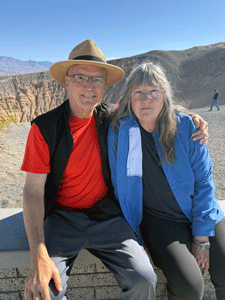
By Bryan Dunn
I am very pleased to be asked to share my experiences with peripheral artery disease (PAD) in hopes of helping others deal with this condition and understanding we all have unique experiences that can be valuable for practitioners as well as patients. My name is Bryan Dunn, I have just turned 67, and I am married to my wonderful partner, Linda, who also happens to be a nurse practitioner. We are enthusiastic dog lovers, particularly greyhounds and lurchers, for which we operate a non-profit rescue and placement operation in Lubbock, Texas. As retirees, we have plenty of time daily get them out of their kennels for daily walks totaling four miles or more, and as a PAD patient, I believe there is hardly any better therapy to keep my condition stable.
My PAD diagnosis came about two years ago after I had noticed that I had occasional numbness in my right foot and occasional dizziness that would break out during my exercise sessions. I think it is also relevant to mention that I had undergone an extensive heart operation five years ago that included two bypasses. As I understand things from a lay perspective, the same process that caused atherosclerosis to develop in my cardiac arteries has also caused arteries in my left leg to block blood flow and cause the symptoms commonly associated with PAD. My cardiologist told me at the time of diagnosis that my history of cardiac bypass made the likelihood of PAD greater. Fortunately, I happen to be a longtime devotee of daily physical exercise which aided me greatly in my convalescence from heart surgery, as well as in keeping my PAD symptoms under control.
What has helped me the most with my PAD is not just my habitual exercise, but also my experience in an excellent cardiac rehab program after my heart surgery that comprehensively addressed my exercise therapy, nutritional needs, and psychological state after what was a devastating and fearful event. All of these areas correlate closely to the needs of a patient dealing with PAD, and I would believe that it would be for the better if such a diagnosis got patients access to such a professionally supervised program. In addition to my daily walking and exercise regimen, my cardiologist has performed three angioplasties on my PAD leg. One in which a stent was placed behind my left knee and two others that involved opening up blockages that had developed, including one such procedure a month ago involving an atherectomy nicknamed a “Roto-Rooter” because it uses a small device to clear plaque from the artery wall — along with two balloon angioplasties, which involve inflating a tiny balloon inside the artery to widen it and improve blood flow.
I am grateful to my cardiology team as well as my thoracic surgeons who patched me up five years ago, all of whom provided helpful support and advice on how to manage atherosclerotic cardiovascular disease on a day-to-day basis. I am also grateful to the wonderful and caring administrators and members of my Facebook PAD exercise, wellness and support page from whom I take inspiration to live as healthy a life as I can day by day. It is mostly from my experience as a patient five years ago being delivered a shattering diagnosis of my heart condition that I am also able to better understand, empathize and communicate with a patient with any kind of atherosclerotic diagnosis, including PAD.
PS: My greyhound buddy Tripp is wagging his tail to let me know it is time to get out for our walk this morning; I wish a good day and good walking to all!
HEALTH CARE DISCLAIMER: This site and its services do not constitute the practice of medical advice, diagnosis or treatment. Always talk to your health care provider for diagnosis and treatment, including your specific medical needs. If you have or suspect that you have a medical problem or condition, please contact a qualified health care professional immediately. If you are in the United States and experiencing a medical emergency, call 911 or call for emergency medical help immediately.
For more information on this health topic, visit heart.org.
Would you like help dealing with heart or stroke conditions -- either yours or someone else’s? Join us in the AHA’s Support Network! We are an online community of patients, survivors and caregivers where you can share your experience while getting encouragement, hope and informational resources from others who have been there. Membership is free and the benefits can be priceless. Register today.